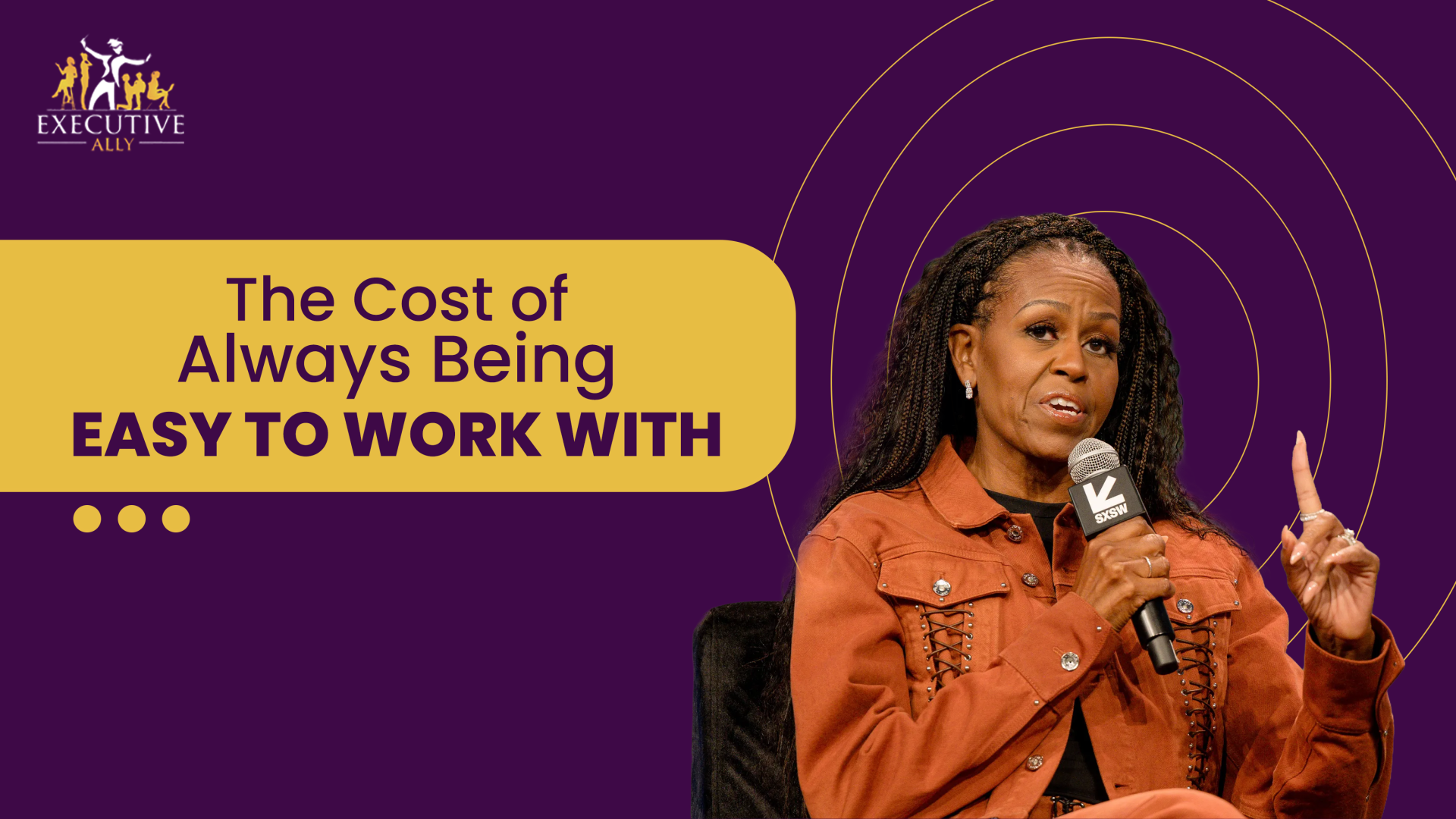
Being described as “easy to work with” often sounds like a compliment.
It signals reliability, adaptability, and a collaborative mindset — qualities most professionals aim to build. In many teams, it becomes part of how you’re known:
The person who keeps things moving. The one others can depend on.
But over time, that identity can start to carry a quieter cost.
In practice, being easy to work with often means adjusting quickly.
You take on last-minute changes without resistance. You smooth over disagreements. You step in where needed — even when it wasn’t originally your responsibility.
None of this feels like a problem in isolation. In fact, it often gets rewarded.
But the shift happens gradually.
You begin to notice that you’re the one expected to accommodate. Meetings move around your schedule. Deadlines tighten, and you absorb the pressure. When something needs fixing, your name comes up.
Not because you’re the only one capable — but because you’re the most likely to say yes.
“What started as a strength begins to shape expectations.”
Consider a common scenario.
A project is running behind, and the team needs someone to close gaps. You already have a full workload, but you agree anyway. It feels easier than pushing back.
The work gets done. The team moves forward. But the pattern repeats.
Over time, your role quietly expands — not always in visible ways.
You’re contributing more, but not necessarily in ways that are recognized as leadership. You’re seen as dependable, but not always as someone who sets direction.
This is where the cost becomes clearer.
When you’re consistently accommodating, you have less space to:
question decisions
offer a different perspective
influence how work is shaped — not just delivered
The focus stays on execution, not direction.
For many women, this pattern is reinforced early. Being collaborative, supportive, and responsive is often encouraged — and rightly so. These qualities build strong teams.
But without awareness, they can also lead to over-accommodation.
Saying yes becomes the default. Pushing back starts to feel uncomfortable — even when it’s necessary.
“Being helpful can quietly come at the cost of being heard.”
There’s also a perception layer at play.
When you’re easy to work with, your contributions can become expected rather than examined.
Effort becomes invisible. Boundaries become flexible. And because you rarely disrupt the flow, you’re less likely to be seen as someone who challenges thinking or shifts outcomes.
This doesn’t mean the solution is to become difficult or resistant.
It’s about noticing where ease has replaced intention.
There are moments where:
- staying quiet maintains harmony, but doesn’t move the work forward
- agreeing quickly avoids friction, but misses an opportunity to shape direction
- being endlessly helpful limits your visibility and influence
The shift begins with small decisions.
Pausing before automatically saying yes. Asking a question instead of immediately solving. Holding your perspective — even if it slows the conversation slightly.
These aren’t dramatic changes.
They’re subtle adjustments in how you show up.
Over time, they change how others experience you — not just as someone who supports the work, but as someone who shapes it.
“The goal isn’t to stop being collaborative. The goal is to stop disappearing inside of it.”
There’s a useful contrast in how leaders like Michelle Obama have often been described.
Alongside warmth and approachability, there’s also clarity and conviction.
The ability to engage without over-accommodating. To connect, without stepping back from perspective.
That balance is what many professionals are navigating.
Because being easy to work with isn’t the goal in itself. It’s one part of how you operate.
What matters is whether it’s a conscious choice — or an automatic pattern.
When it becomes intentional, it works for you.
When it becomes default, it can quietly limit you.
Have you noticed this pattern showing up in your own career?
- Taking on more because it feels easier than pushing back?
- Becoming the person everyone relies on?
- Realizing that being highly collaborative sometimes comes at the expense of being fully heard?
Many professionals navigate this dynamic quietly for years before recognizing it.
How have you balanced collaboration with maintaining your perspective, boundaries, or influence?
Curious whether this resonates with others — please comment and share your thoughts or experiences below.