We often hear women leaders talk about themselves in the language of duty:
“I should be more confident.”
“I should be more visible.”
“I should be influencing at the top.”
On the surface, this sounds like ambition. But if we look closer, that little word “should” often carries a quiet weight of expectation, comparison, and self‑criticism. And over time, that weight doesn’t grow leaders. It quietly erodes self‑awareness and burns people out.
When we say “I should,” we’re often responding to three invisible forces:
- Someone else’s standard – “This is what a leader is supposed to look like.”
- Comparison – “She’s so confident; I’m not enough yet.”
- Fear of falling short – “If I’m not doing this, I’m behind.”
Inside leadership, that language can sound like:
- “I should be taking more risks.”
- “I should be speaking up in every meeting.”
- “I should be managing my time better.”
The problem isn’t ambition. The problem is that “should” rarely invites reflection. It invites performance. It shifts our focus from “What feels right for me?” to “Am I measuring up?” And that is a recipe for burnout, not growth.
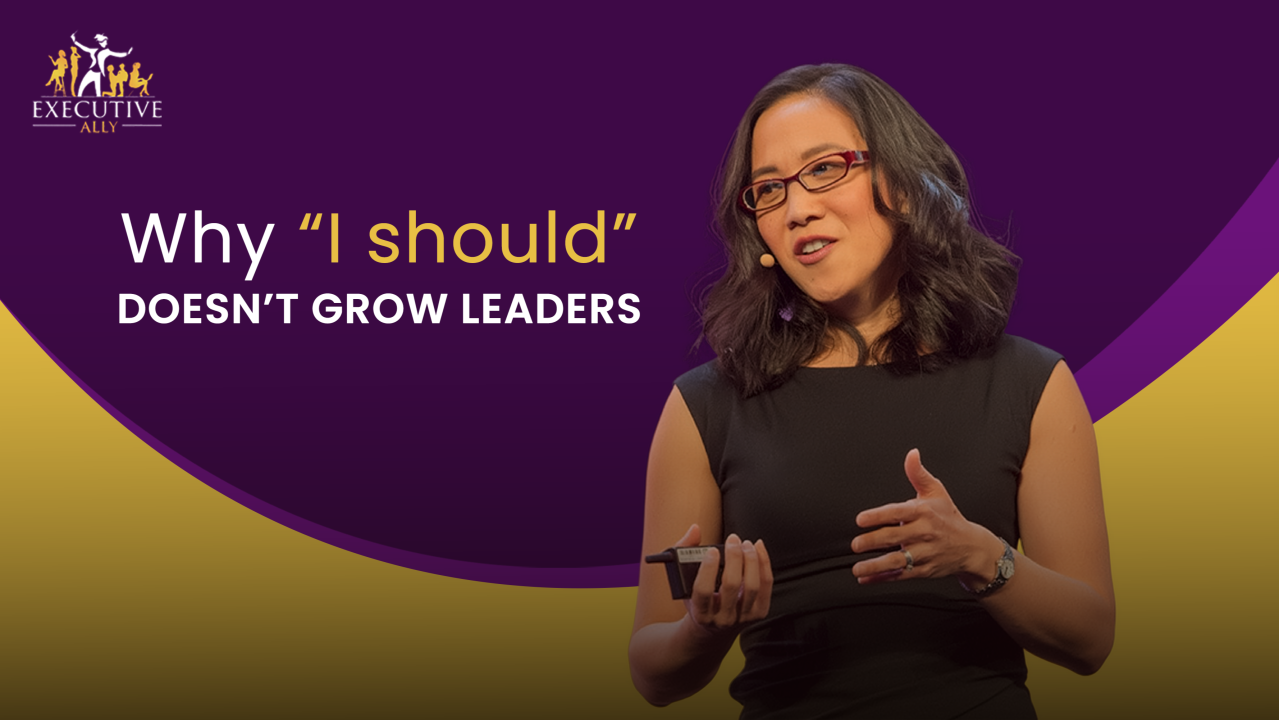
Even leaders anchored in psychology wrestle with “I should.” Take Angela Duckworth, the psychologist behind the concept of grit and deeply studied growth mindset. In her work, she’s discovered that effort, reflection, and small, repeated choices matter more than the idea of “being ready” or “being enough.”
Duckworth didn’t become a leading voice in leadership and mindset by believing she should already have it all figured out. She became one by asking questions like:
- “What can I learn from this setback?”
- “What small step can I take today, even if I’m uncertain?”
That’s the heart of a growth mindset: not “I must be perfect,” but “I can grow at this, one small choice at a time.” When women leaders replace “I should” with “I can choose to try this,” they align themselves with the same kind of growth that Duckworth studies and lives.
In our work with emerging women leaders, we often see “should” language in three places:
- Confidence: “I should already know how to lead like this.” Instead of noticing what they are learning, they fixate on what they think they’re lacking.
- Visibility: “I should be posting more, speaking more, showing up more.” Visibility becomes a chore, not a conscious choice connected to purpose.
- Influence: “I should be at the top table.” Instead of asking, “What do I want to influence, and where can I start?”, they feel like they’re failing by default.
When “I should” becomes the default, women leaders start measuring themselves against a version of leadership that wasn’t built with their humanity in mind.
In our work with emerging women leaders, we often see “should” language in three places:- Confidence: “I should already know how to lead like this.” Instead of noticing what they are learning, they fixate on what they think they’re lacking.
- Visibility: “I should be posting more, speaking more, showing up more.” Visibility becomes a chore, not a conscious choice connected to purpose.
- Influence: “I should be at the top table.” Instead of asking, “What do I want to influence, and where can I start?”, they feel like they’re failing by default.
When “I should” becomes the default, women leaders start measuring themselves against a version of leadership that wasn’t built with their humanity in mind.
A small linguistic shift can open up a lot of space: replace “I should” with “I choose.”
- “I should be more confident.” → “I choose to speak up once today.”
- “I should be more visible.” → “I choose to share one reflection this week.”
- “I should be influencing at the top.” → “I choose to clarify what I want to influence, first.”
This is not about lowering standards. It’s about shifting from duty‑driven self‑talk to agency‑driven self‑talk. “I should” lives in the world of obligation. “I choose” lives in the world of reflection, intention, and stewardship of your own energy.
Leaders like Angela Duckworth show us that growth isn’t about being flawlessly, automatically “ready.” It’s about choosing to persist, to reflect, and to adapt—quietly and consistently.
A growth mindset is not about being “perfect in progress.” It’s about being curious, clear, and kind with yourself as you grow.
When women leaders stop asking, “Am I doing enough?” and start asking, “What do I want to practice?” or “Where can I stretch myself gently?” they open up space for:
- Self‑awareness – noticing how they feel as they take risks, not just whether they “look” confident.
- Ownership – choosing what they take on, instead of reacting to external pressure.
- Sustainable growth – building leadership stamina, not speed.
This is the kind of leadership development that doesn’t require a performance. It requires presence.
At Executive Ally, we’ve noticed that the most powerful growth in women leaders doesn’t happen when they’re pushed to “do more” or “be more.” It happens when they’re given space to:
- Pause – before reacting, before comparing, before saying “yes.”
- Reflect – on what they’ve actually learned, not just what they think they should have achieved.
- Re‑frame – their language, their timelines, and their definition of success.
That’s why our work is built around small, reflective practices rather than big, performative promises. The women leaders we work with often come to us quietly saying, “I feel like I’m not enough yet.” They leave with a different question: “Who am I becoming, and what choices support that?”
If you’ve ever caught yourself thinking, “I should…” in your leadership, you’re already on the right path. The next step isn’t to push harder. It’s to choose a gentler, clearer language one small, quiet shift at a time.
What’s one “I should…” thought you’ve had to rethink in your own leadership?